Technology
Next-Generation Multimodal AI: How Models Combine Text, Video, Images and Programming, and What Opportunities This Opens Up for Business
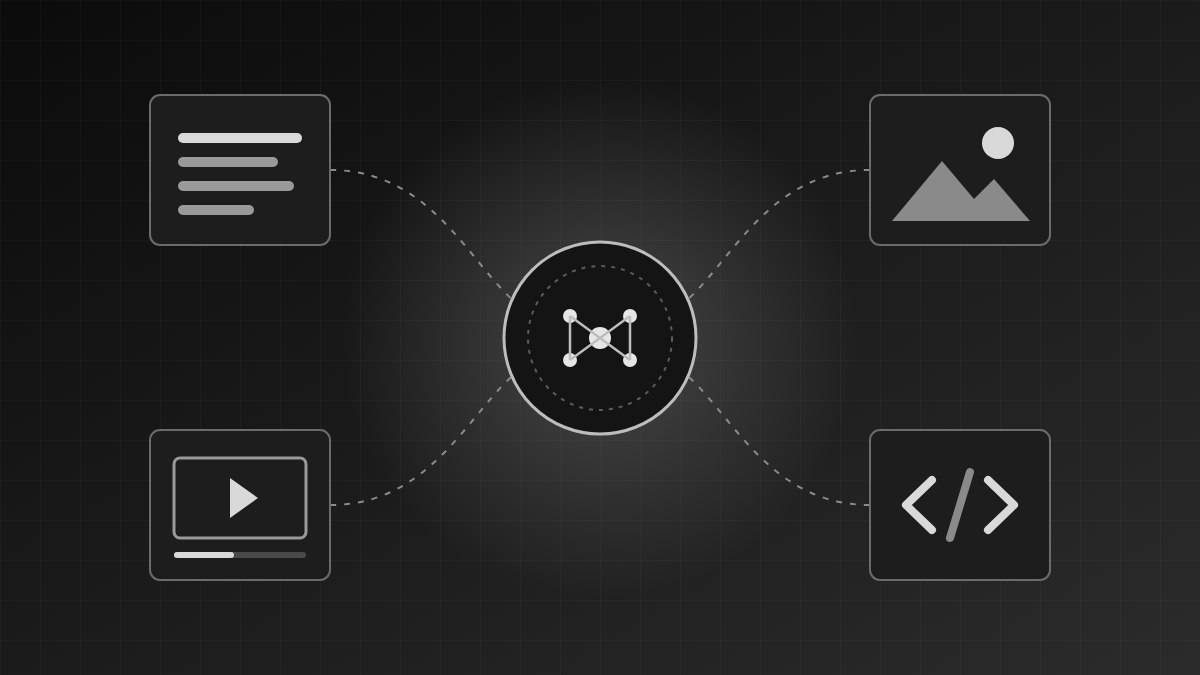
Not long ago, every task required a separate neural network: one recognized speech, another described photos, a third wrote code. Next-generation multimodal models work differently. They treat text, images, audio, video and source code as parts of a single context and can move from one format to another without intermediate "translators." For business, this means that AI can, for the first time, work with information in the form in which it actually exists inside a company: in scans, screenshots, call recordings, factory-floor video and code repositories.
Key takeaways
- Multimodal models process text, images, video, audio and code in a single context;
- Their main value lies in handling "unstructured" data, which makes up the bulk of corporate information;
- The most mature use cases: document processing, customer support, quality control and software development;
- Limitations relate to the cost of video processing, accuracy and data protection;
- It is best to start with one process and a clear metric rather than a universal platform.
What has changed in multimodality
The first multimodal solutions were a "patchwork" of several models: an image was first turned into a text description, and only then did a language model work with it. This approach lost detail — the layout of elements in a diagram, small print in a table, the tone of a voice.
Modern models are trained on different types of data simultaneously and build a shared internal representation. As a result, they can, for example, read a chart on a slide and immediately write code that reproduces it with real data, or watch a screen recording of an interface bug and suggest a fix. A separate step forward is long-form video: models have learned to locate the right moment in a recording that runs for hours and answer questions about its content.
Where businesses are already benefiting
Documents and back office
Invoices, contracts, delivery notes and forms often arrive as scans and photos. A multimodal model extracts data from them while taking the document's structure into account — tables, stamps, handwritten notes — and reconciles it with the accounting system. This reduces manual data entry and the number of errors.
Customer support
It is easier for a customer to send a screenshot or a short video than to describe a problem in words. The model understands what is shown on screen, matches it against the knowledge base and suggests a solution, or hands the case to a specialist with a ready-made summary.
Manufacturing and logistics
Analyzing images and camera footage helps detect product defects, monitor safety compliance and track the condition of cargo. The advantage of new models is that they can be adapted to a new task with a text instruction and a few examples rather than lengthy training from scratch.
Development and product
Models turn an interface mockup or a hand-drawn sketch into working code and analyze architecture diagrams and documentation. Teams get a shorter path from idea to prototype.
Marketing and content
A single model can analyze a competitor's video, identify its key messages, and prepare a script, copy and draft visuals. The final decision stays with a human, but the volume of routine work drops significantly.
Limitations and risks
- Cost. Processing video and high-resolution images requires far more compute than text. Without controls on request volume, budgets grow quickly.
- Accuracy. Models still make mistakes when reading fine details and may confidently "fill in" missing information. Critical processes need human spot checks.
- Privacy. Photos, call recordings and videos often contain personal data. It is important to decide in advance which data can be sent to an external provider and which must be processed only within the internal perimeter.
- Quality evaluation. Objective metrics are harder to build for multimodal tasks, so companies should create their own set of test examples.
Where to start
- Find a process where employees spend a lot of time working with images, documents or recordings.
- Define a measurable goal: processing time, error rate, cost per operation.
- Run a pilot on real data, comparing several models.
- Budget in advance for integration, quality assurance and scaling.
Bottom line
Multimodal AI unlocks the part of corporate information that used to remain "invisible" to automation. The winners are companies that treat it not as an impressive demo but as a tool for a specific process with clear economics.
Prepared by the editorial team. This material is for informational purposes only.